The Jig Is Up
Pluto is no longer a planet. Astronomers have removed its status as a planet, and have relabeled it a Trans-Neptunian. Clyde William Tombaugh must be pissed.
The Shrinking Solar System
Pluto is no longer a planet. Astronomers have removed its status as a planet, and have relabeled it a Trans-Neptunian. Clyde William Tombaugh must be pissed.
The Shrinking Solar System
In an effort to justify the buying of new books, I have compiled the entire list of unread books I currently have in Philadelphia. I would like to get through all of them before the end of 2006.
I guess I have to average 6 books a month to be done...but I thought I'd at least make an attempt.
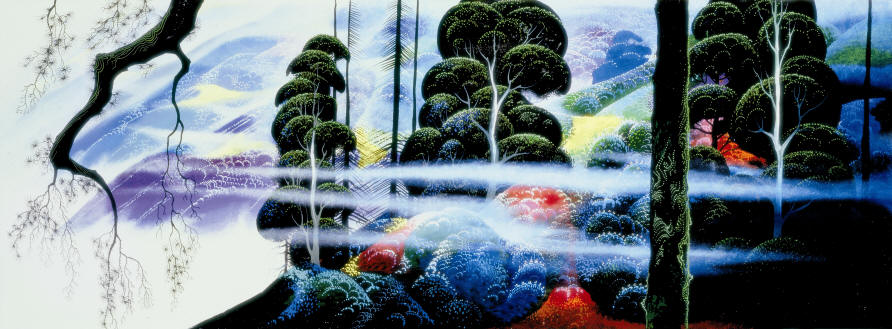
If you're interested in art, drawings, painting, illustrations, comics or anything along those lines, then I would heavily recommend you visit this blog: lines and colors. One of the best blogs on art that I've seen in the past years. The illustration I have above is from an artist called Eyvind Earle. Check out the post on lines and colors about his work.
So our movie release party for Shriek just ended. It turned out successful, and as a result of our activities we are beat and tipsy. More deets tomorrow, when my eyelids don't feel so heavy.
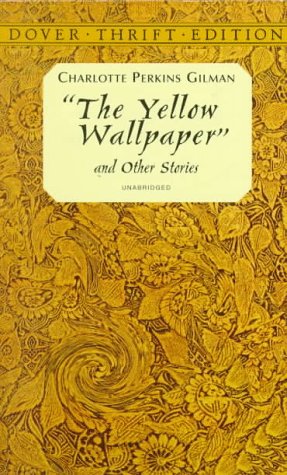 For three excellent horror/ghost stories with a psychological bent and a certain amount of ambiguity, I would recommend:
 Being a big Lost fan and believing that one gets more out of the show, when one is really paying attention, I thought I would provide the link for literary references made in Lost. The link comes from Lostpedia, an excellent resource for the Lost-obsessed.
To my book group, as you all know, nominations are closed. Please send me your top 3 choices via e-mail or as a comment to this post.
To those who stop by my blog once in a while. I've started a monthly bookgroup with the goal of reading some of the books in the 1001 books that you must read before your die list. We will be having a review and discussion session here on the books we read every first weekend of the month, starting in October.

I am about to begin reading Mysterious Island by Jules Verne, because I stumbled across a blog that alleges that the secrets of Lost (the tv show) will be revealed to those who read the book. So I thought, why not? I'll report back in a couple of days.
 I would recommend I Capture the Castle to almost anyone as an entertaining, and sometimes touching account of life in a crumbling castle in England. Written by Dodie Smith, probably most famous as the author of 101 Dalmatians, I Capture the Castle takes a memorable look into the life of Cassandra and her bohemian family, and their destitute lives in a run-down castle.
While this can be seen as coming-of-age novel, it veers far from being cliched, and is truly entertaining. Cassandra is a lovable heroine and more three-dimensional and thoughtful than many female characters portrayed by writers. I recommend you read this story for the characters, and for the moments that it brings.
For someone who is not very visual, I found that every time I picked up this book, I could instantly envision spring in England, near the castle. It's a lovely way to spend an afternoon, and while it is not a book for children, I can see a my younger self being captured by this book.
Don't have time to write about this article yet but here's the link so you can form your own opinion before I do:
American Nativism

They're charging you $2,380 for this womb chair, and $697 for the footstool. This is funny to me because we had this exact chair in our dorms in college... in fact the picture looks like it was taken at our dorms.
The World Fantasy Award Finalists list is out! And I have to say the nominees for best novel look infinitely more promising than the disastrous Hugo list for this year *ahem* Accelerando?? I felt like I was reading the author's mental vomit on speed. Anyways here's part of the list, stolen from Vanderworld.
NOVEL
Kafka on the Shore, Haruki Murakami (Harvill; Knopf)
The Limits of Enchantment, Graham Joyce (Gollancz; Atria)
Lunar Park, Bret Easton Ellis (Knopf; Macmillan)
Od Magic, Patricia A. McKillip (Ace)
A Princess of Roumania, Paul Park (Tor)
Vellum, Hal Duncan (Macmillan; Del Rey)
NOVELLA
Another War, Simon Morden (Telos Publishing)
"The Imago Sequence", Laird Barron (F&SF May 2005)
"In the Machine", Michael Cunningham (Speciman Days, Farrar, Straus and Giroux)
"Magic for Beginners", Kelly Link (Magic for Beginners, Small Beer Press; F&SF Sep 2005)
"UOUS", Tanith Lee (The Fair Folk, SFBC)
Voluntary Committal, Joe Hill (Subterranean Press)
SHORT FICTION
"Best New Horror", Joe Hill (Postscripts #3, Spr 2005)
"CommComm", George Saunders (The New Yorker 1 Aug 2005)
"The Other Grace", Holly Phillips (In the Palace of Repose, Prime Books)
"La Peau Verte", Caitlin R. Kiernan (To Charles Fort, With Love, Subterranean Press)
"Two Hearts", Peter S. Beagle (F&SF Oct/Nov 2005)
ANTHOLOGY
Adventure Vol. 1, Chris Roberson, ed. (MonkeyBrain Books)
The Fair Folk, Marvin Kaye, ed. (SFBC)
Nova Scotia: New Scottish Speculative Fiction, Neil Williamson & Andrew J. Wilson, eds. (Crescent Books)
Polyphony 5, Deborah Layne & Jay Lake, eds. (Wheatland Press)
Weird Shadows Over Innsmouth, Stephen Jones, ed. (Fedogan & Bremer)
COLLECTION
20th Century Ghosts, Joe Hill (PS Publishing)
In the Palace of Repose, Holly Phillips (Prime Books)
The Keyhole Opera, Bruce Holland Rogers (Wheatland Press)
Magic for Beginners, Kelly Link (Small Beer Press)
To Charles Fort, with Love, Caitlin R. Kiernan (Subterranean Press)
After being annoyed by countless discussions online on what genre one book or another belongs to. I decided to address the issue. I thought I'd post it here.
I am a fan of both what we call literary fiction, and science fiction. And as someone who reads many literary works in both categories, it disturbs me how much emphasis we place on categorizing fiction. What does it matter except to limit someone who doesnt like one category or the other from reading sometimes excellent works?
Many times the genre is no more descriptive of a work, than the cover itself. While I can see why someone might debate whether Kazuo Ishiguro's Never Let Me Go is literary fiction or science fiction; there needs to a recognition that sometimes a book can be both literary and still explore themes found in science fiction. Look at George Orwell's 1984 or Margaret Atwood's Handmaid's Tale or M. John Harrison's Things That Never Happen. As someone who finds that today, genres limits what one reads or watches or listens to, I suggest that maybe we should begin to explore works for merit rather than trying to classify them so that they fit comfortably within the boundaries that we have defined.
Note: I did not address the argument that genrefication is beneficial for categorization, placement in a bookstore, or that well we need some sort of genrefication to study certain movements, or illuminate how we think about certain books aspects of the argument, because clearly some classification is needed, and has its purposes. It would be stupid to argue against all genrefication. However it seems to me, when someone in a discussion group is asking, hey is this ficiton or science fiction, all they are looking for is to be spoon fed a point of view, and a preconcieved notion of what the book is going to be about, which I do have a problem with. Please feel free to comment.
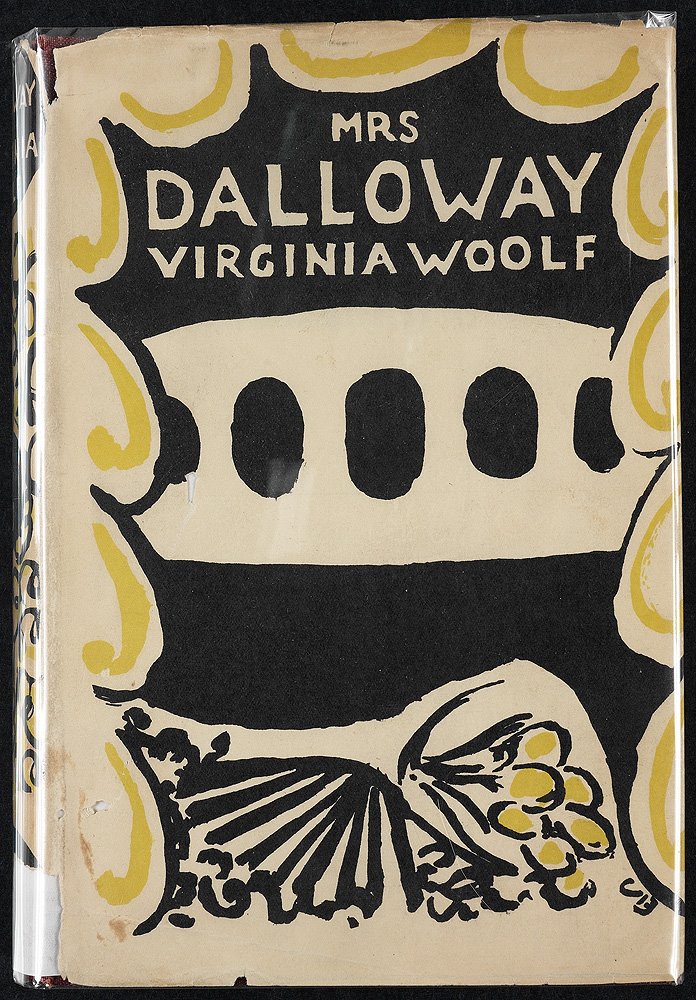 Just finished Mrs. Dalloway, which I have to say, was not as bad as everyone made it out to be. Yes the stream of consciousness was hard to follow---more distracting than anything else, but the story itself is more intriguing than I was led to believe. Of course the average contemporary reader can benefit much more, if you chose to supplement your reading with notes, etc.
Although, I can not say that Mrs. Dalloway will be a personal favorite; I felt reading it was a matter of endurance rather than enjoyment, I am appreciative of the craft of Virginia Woolf in sculpting the story. I would certainly like to read more Virginia Woolf, and I can’t wait to pick up The Hours, once I get through everything else that’s on my reading list.
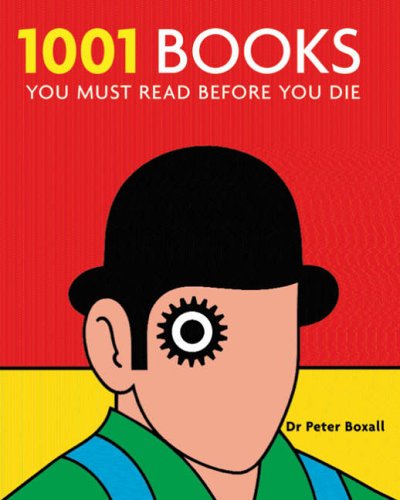 While messing around on Librarything.com, I found mention of this book: 1001 Books You Must Read Before You Die. While the book is worth buying if you like that sort of thing, here is the actual list if you're not ready to commit.
The cover featured here is the UK edition and much more appropriate then the hideous, this is a bad, not so much written as spawned by marketers, Barnes&Noble sales rack book, that the US cover seems to aspire to. What are the marketers/designers thinking? Honestly would anyone caught thinking about purchasing such a hefty volume really appreciate the US cover? But I quibble. (Although I actually know people who are buying the book from the UK to avoid the embarassment of owing the US edition, so...)
Anyways, like any definitive list, this one got mixed reviews, however it's not a bad place to start if you're going to read some fiction. And its a LOT less stuffy than some other lists that I could mention.
I happened upon a bit of information that disturbed me. Did you know that publishing houses more and more resort to burning their unsold inventory rather than selling them at a large discount? To me this seems like such a waste...
 I have just come back from a trip to New York, and have found my own little piece of heaven in the city. I discovered The Strand this weekend. The jaw-dropping one stop shopping for all book lovers. They have miles and miles of books. New, remaindered, used, rare, out-of-print. It's all here. The best thing about The Strand, is the ability to browse for things that you never knew exsited, but want desperatly once you see it in the store. Of course I would recommend visiting on a weekday, since many a time, I felt I was going to be trampled, while stooped down to check out the books on the lower shelves. It was wonderful.

I have to say, I kind of want this. Of course for $115 dollars, I could also buy enough real turf for a nice little sitting area in my office.

I finally restored this, thank goodness for David and Technorati.
The Last Unicorn has always been near and dear to my heart. I first discovered it in its animated form as a child and was touched by the magic of the story and the beauty of the music that accompanied the film. It was not until very much later, well into college, that I discovered the book itself by Peter S. Beagle. The book was as touching to me as an adult as the movie had been to me as a child.
So when I discovered that Beagle had penned a sequel (actually they’re calling it a coda, those clever marketers), Two Hearts, I was absolutely delighted. Two Hearts (nominated for a Hugo this year) is a novelette (longer than a short story, shorter than a novel) set in the universe of The Last Unicorn. It takes place many years after the original story but brings back the four main characters of The Last Unicorn. For many years Beagle had refused to write a sequel to his beloved story, believing The Last Unicorn was a stand alone novel that told everything that needed to be told of the story.
[Spoiler alert] (If you have not read the sequel, please do so before reading on. Below are links to for buying the novelette)
Before the Hugo awards are announced (at the end of August), you can find a free version of it at: http://www.sfsite.com/fsf/fiction/pe01.htm.
However if you want to have your own copy, there are currently two ways of obtaining one.
One is by going to: http://www.conlanpress.com/html/books.html and buying the audio file of The Last Unicorn. A hardcover limited version signed by the author comes as a gift to the first 3000 customers. If you want this version, the ONLY way to get it is by buying the audio file of The Last Unicorn
The other is by going to Amazon and buying The Line Between, Peter S. Beagle's new collection of stories, Two Hearts is one of them.
After reading Two Hearts, I am not sure what to think, I do not know what I was looking for in the sequel. As Beagle claims, The Last Unicorn ended where it did because it had come to its natural and (to me) perfect conclusion.
First the things I had a problem with, I did not like that in Two Hearts, the unicorn is addressed as Amalthea (at one point Smendrick even goes so far as to claim that it is her name). Those familiar with The Last Unicorn will remember that Smendrick called the unicorn Lady Almalthea to fool King Haggart. The unicorn was ALWAYS referenced as she or the unicorn to the reader. This is not just simple quibbling on my part. I believed that Beagle kept the unicorn nameless intentionally. It separated her from her companions; a way of reminding the audience of her true nature and her inability to be one of them. Calling her Amalthea in the coda I found untrue to the original.
I also found the killing of the griffin to be a slightly disenchanting scene. The griffin felt incredibly one-dimensional--- more plot device than creature--- as the force that set the story in motion and took it to its natural end. This was surprising because Beagle has always managed to give personality and depth to his creatures. The harpy and the Red Bull of The Last Unicorn both felt more real to me than the griffin in Two Hearts.
However this is not to say that Two Hearts failed as a continuation of The Last Unicorn, Two Hearts is a beautiful story. Especially for those who have read The Last Unicorn. It was surprising how strongly I must’ve felt about the story, and of the relationships, because at the first mention of Lir and the unicorn, I teared up in a way that surprised me. After all it had been many years since I had read the original. This effect is no doubt due to the mastery of the author.
Beagle’s voice stays true to the original, and the characters are very much the same, older but in no way altered to fit a new story. While The Last Unicorn was a story distinctly written by a young man, Two Hearts is no less distinctly a work of an older man. Between its pages, Beagle manages to address his own mortality.
Perhaps this is why it startles me. The Last Unicorn, while tragic, ends on a beautifully heroic note. The hero bereft of his love, rides of into the distance. Yet there is always hope…because he determines to remember her, to honor her, and to wait for her. In Two Hearts, age has paled everything and turned the rest to dust. It is no longer only a tale of a highly romantic and honorable love; it is also a tale of a man, once young, now old. I do not think I loved Two Hearts in the same way that I loved The Last Unicorn. However, as I become older, I’m also not sure that I will not grow to love it. I think only time will give me that answer.
In a world of increasingly unnecessary objects, I give you ….
the USB Beverage Chiller...because far be it for any of us to tear ourselves away from the computer, and make that long and daunting trek to the kitchen for a chilled beverage.

